All Categories
Featured
Table of Contents
- – Adjusting AI Facilities for Australian Busines...
- – The Shift to High-Density Data Centers
- – Sovereign AI and Local Compliance in 2026
- – Moving From Big Language Designs to Little La...
- – The Function of Edge Computing in the regiona...
- – Energy Restraints and Sustainability Targets
- – The Convergence of Networking and AI
- – The Effect on IT Worker and Skills
- – Future-Proofing for 2026 and Beyond
- – A Practical Approach to AI Facilities
Adjusting AI Facilities for Australian Business Districts
Australian organizations in 2026 face a specific set of facilities pressures as they move from experimental AI models to full-blown production. The initial enjoyment of early generative tools has actually been replaced by a pragmatic focus on regional compute, information sovereignty, and energy efficiency. Most enterprises have recognized that relying on far-off overseas information centers introduces latency and regulative risks that are no longer acceptable.The push for sovereign AI has ended up being a primary driver for infrastructure investment. By 2026, the Australian federal government has executed more stringent guidelines concerning where delicate data is processed and stored. This shift has required business in the local market to re-evaluate their cloud-first methods. Rather of sending out data to Northern Hemisphere centers, firms are significantly utilizing high-density compute clusters located within nationwide borders. This ensures that data remains under Australian jurisdiction, satisfying both legal requirements and consumer expectations for privacy.
The Shift to High-Density Data Centers
Requirement data center rack densities from numerous years back are inadequate for the hardware needed in 2026. Modern AI chips create heat at levels that conventional air cooling can not manage. Information centers in regional centers are going through significant retrofitting to include liquid cooling systems. This change is not simply about temperature management. It is about the physical capability to run the huge parallel processing jobs required for real-time model training and inference.Investment in AI Adoption Governance reflects a wider approach technical self-reliance for businesses that can not manage the downtime or latency of basic public cloud offerings. These companies are choosing specialized infrastructure providers that offer bare-metal access to the current processing systems. By doing so, they prevent the "noisy neighbor" result of multi-tenant cloud environments where other users' work can decrease important AI procedures.
Sovereign AI and Local Compliance in 2026
National security and information defense laws have actually developed considerably by 2026. The Australian Prudential Guideline Authority and other bodies now require clear visibility into the entire AI supply chain. This includes the physical place of the silicon that processes the data. For a company operating in the local region, this implies that the previous "black box" method to cloud computing is dead.Organizations now require transparency from their suppliers. They require to understand precisely which facility is managing their work and how that facility abides by local security standards. This has led to the rise of localized AI zones within major urban areas. These zones supply the necessary compute power while making sure that data never ever crosses a worldwide border. This regionalization of the cloud is a specifying characteristic of the 2026 tech environment.
Moving From Big Language Designs to Little Language Models
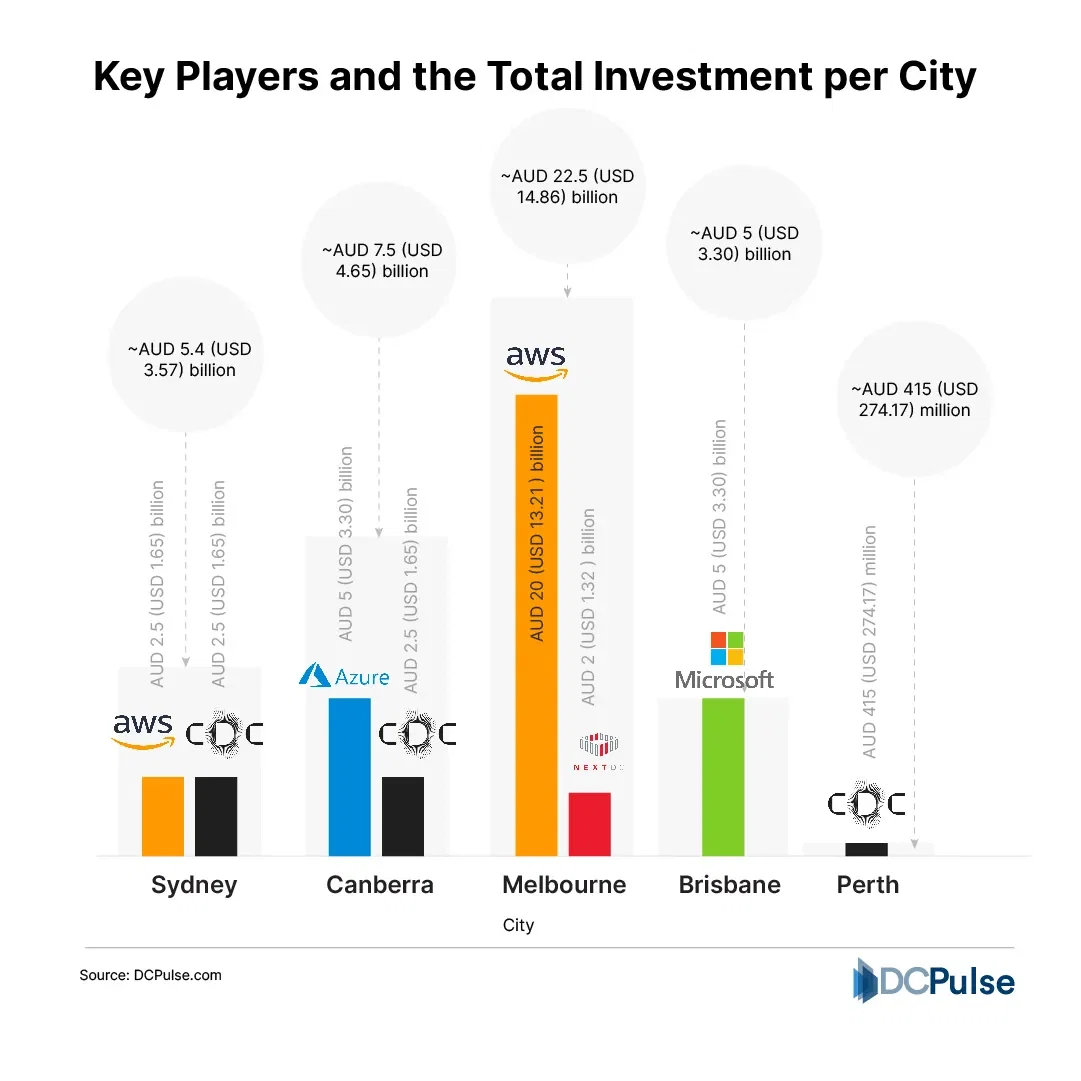
While huge, multi-trillion specification designs dominated the news in previous years, 2026 is the year of the Small Language Design (SLM) These models are highly specialized, trained on specific market information, and require far less compute power than their predecessors. For a business in the surrounding area, deploying an SLM is typically more affordable and precise than utilizing a general-purpose model.Adopting Rigorous AI Adoption Governance Systems enables local companies to bypass the high costs of general-purpose cloud designs while preserving high efficiency for specific jobs like legal document analysis or medical diagnostics. Because these designs are smaller sized, they can operate on more modest hardware, in some cases even on-premises or at the edge. This lowers the reliance on huge data center clusters and offers companies more control over their technological stack.
The Function of Edge Computing in the regional market
Edge computing has moved beyond easy IoT sensors. In 2026, "Edge AI" refers to the capability to run complex inference jobs at the point of information collection. This is especially pertinent for Australian industries like mining, agriculture, and production, where operations typically occur far from central information hubs. By processing data locally in regional industrial zones, companies can make split-second decisions without waiting for a signal to travel to a cosmopolitan data center and back.This distributed facilities requires a various management method. It is no longer about handling one big cloud environment. It has to do with managing numerous small, detached calculate nodes. Software-defined infrastructure has actually become the standard for keeping these nodes upgraded and secure. The objective is to guarantee that an AI design running in a remote part of the region is just as secure and efficient as one running in a Tier 1 data center.
Energy Restraints and Sustainability Targets
Among the most considerable difficulties for AI in 2026 is power. The Australian energy grid is under consistent pressure, and data centers are some of the largest customers of electricity. Enterprises are now being held accountable for the carbon footprint of their AI workloads. It is no longer enough to have a quick model. It must likewise be an efficient one.This has resulted in a rise in interest in "green AI" metrics. Business in the local business community are looking for providers that use sustainable energy and advanced cooling strategies to decrease their Power Usage Efficiency (PUE) ratings. In some cases, businesses are scheduling their most intensive AI training jobs to coincide with durations of high renewable resource production. This level of functional sophistication was uncommon in previous years but is now a basic part of facilities management.
The Convergence of Networking and AI
Networking has actually undergone a quiet however essential modification. In 2026, the traffic jam for AI is frequently not the processor itself however the speed at which information can move in between processors. This has led to the adoption of ultra-low-latency fabrics within information centers. For a firm in the local district, this implies that the choice of networking hardware is simply as important as the choice of GPU or NPU.High-speed interconnects allow numerous servers to serve as a single, enormous computer. This is essential for the complex "mixture of experts" architectures that numerous 2026 AI models use. Without these high-speed links, the processors would invest more time waiting on data than actually processing it. As a result, facilities coordinators are spending more of their spending plan on networking than ever previously.
The Effect on IT Worker and Skills
The shift in facilities has altered the roles of IT personnel. The standard "cloud designer" has evolved into the "AI infrastructure engineer." These professionals must understand not just software application and networking but also the physical realities of high-density compute, such as thermal dynamics and power distribution. In the local tech scene, there is a high need for people who can bridge the gap in between traditional IT and specialized AI hardware.Organizations are likewise moving far from siloed AI teams. Instead of having a different group of information scientists working in a vacuum, AI is being integrated into the core IT operations. This ensures that when a brand-new model is developed, the facilities is already in place to support it. This integration signifies organizational maturity. It reveals that AI is no longer seen as a shiny brand-new toy but as a fundamental part of the company, just like databases or e-mail systems.
Future-Proofing for 2026 and Beyond
Future-proofing in 2026 means constructing for flexibility. Technology is moving so quickly that hardware purchased today may be obsolete in eighteen months. To fight this, business are approaching modular facilities. They are utilizing containers and orchestration layers to make sure that their AI applications can be quickly moved from one supplier to another, or from the cloud to on-premises hardware.This modularity also applies to the designs themselves. By using open-standard APIs, business in regional hubs can switch out the underlying AI design without having to rewrite their whole software application stack. This prevents vendor lock-in and allows companies to make the most of the most recent advancements in model performance or precision as quickly as they become offered.
A Practical Approach to AI Facilities
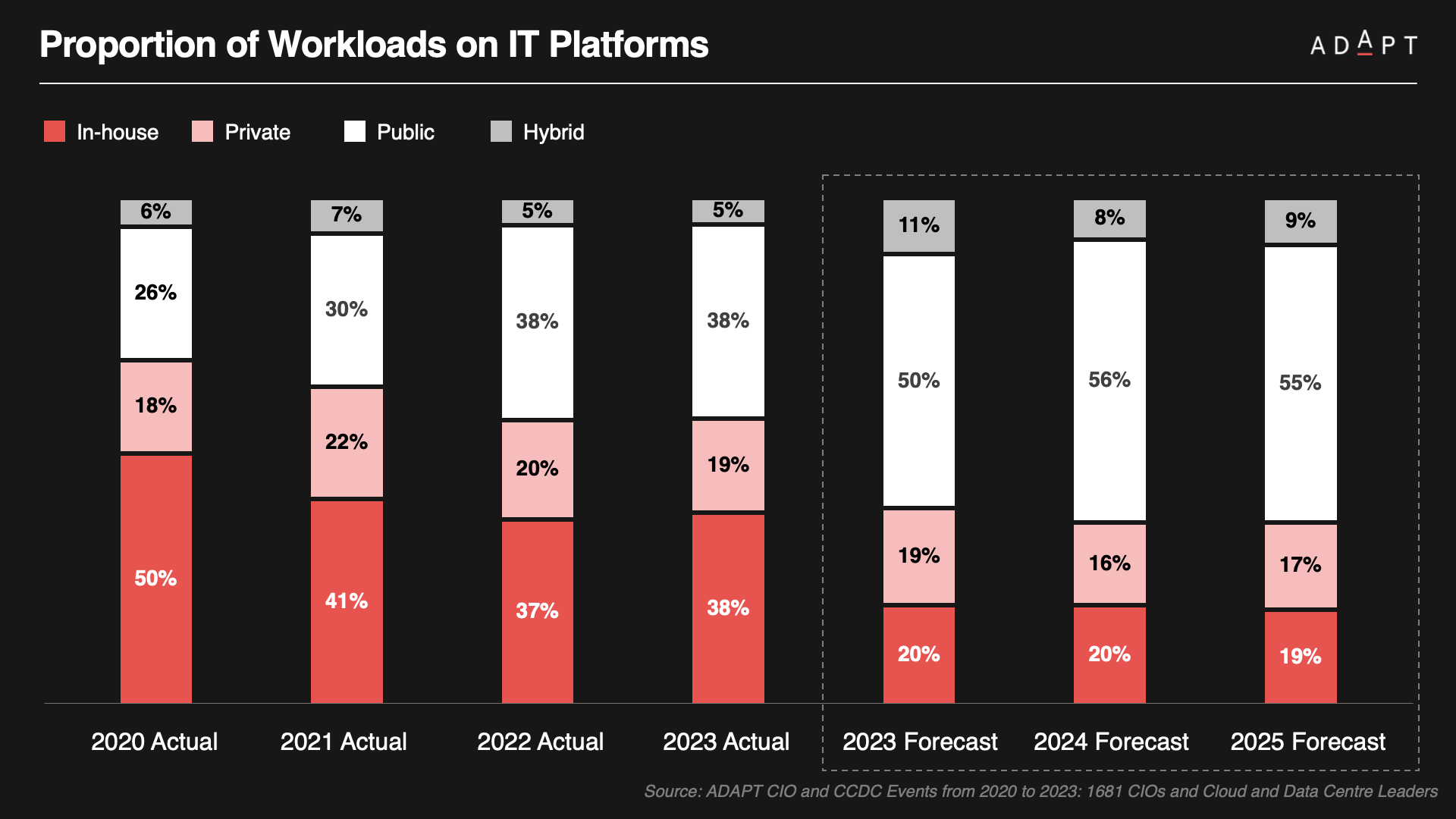
The most successful Australian business in 2026 are those that take a balanced technique. They do not put all their data in one cloud, nor do they attempt to develop everything themselves. Instead, they use a hybrid model that combines the scale of the general public cloud with the security and control of regional, sovereign infrastructure.By focusing on local compute in the local market, these companies are securing themselves against global supply chain interruptions and altering geopolitical environments. They are treating AI infrastructure as a tactical possession instead of an utility. This shift in mindset is what separates the leaders from the followers in the 2026 economy. The focus has moved from "what can AI do?" to "how can we reliably and sustainably run AI at scale?" The focus stays on developing a foundation that is durable, certified, and effective. Whether it is through updating local information centers or releasing edge nodes in regional areas, the objective is the same: to create an environment where AI can deliver real value without compromising on security or sustainability. As 2026 advances, this infrastructure-first technique will continue to define the success of the Australian enterprise.

Table of Contents
- – Adjusting AI Facilities for Australian Busines...
- – The Shift to High-Density Data Centers
- – Sovereign AI and Local Compliance in 2026
- – Moving From Big Language Designs to Little La...
- – The Function of Edge Computing in the regiona...
- – Energy Restraints and Sustainability Targets
- – The Convergence of Networking and AI
- – The Effect on IT Worker and Skills
- – Future-Proofing for 2026 and Beyond
- – A Practical Approach to AI Facilities
Latest Posts
Updating Legacy Databases for Real-Time AI Processing
Five Security Pillars for the 2026 Australian Cloud
The 2026 Outlook for Australian Cloud Facilities Costs
Latest Posts
Updating Legacy Databases for Real-Time AI Processing
Five Security Pillars for the 2026 Australian Cloud
The 2026 Outlook for Australian Cloud Facilities Costs