All Categories
Featured

What the 2026 Blueprint Method for Little Australian Companies
Table of Contents
Operational Effectiveness in the Australian market
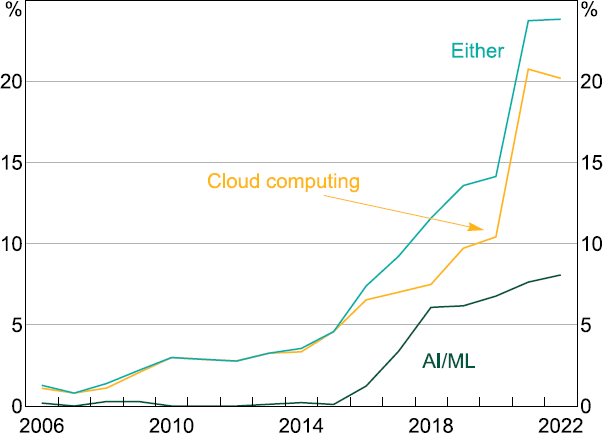
The year 2026 marks a period where generative synthetic intelligence has moved beyond the phase of experimental pilots into a core element of organization infrastructure. In the regional capital, organisations are no longer asking if they must adopt these innovations, but rather how to extract the highest possible return on financial investment from their cloud releases. The initial rush to integrate big language designs has actually been replaced by a more calculated technique that prioritises cost control, information residency, and particular organization results. Success in this environment requires a deep understanding of how cloud resources are taken in throughout reasoning and how to align those costs with measurable value.
The Australian regulatory environment in 2026 has become more specified, especially concerning data sovereignty and the ethical application of automated systems. This clearness permits businesses in the local territory to prepare their cloud architectures with higher certainty. However, the intricacy of managing distributed AI work throughout public and personal clouds remains a significant obstacle. Companies that focus on digital infrastructure are finding that the most efficient path involves a mix of global cloud providers and regional sovereign cloud options to balance performance with compliance.
Cost management has emerged as the main chauffeur of technique. In the early days of adoption, numerous organisations faced "sticker label shock" when their experimental models were scaled to deal with countless day-to-day transactions. By 2026, the industry has actually adopted specialised FinOps practices customized for AI. These practices involve tracking the cost per token, the performance of various design sizes, and the physical location of calculate resources. Organisations in the urban centre are significantly turning to little language designs (SLMs) that can run on more economical hardware while still offering high accuracy for particular tasks like file analysis or customer assistance.
Facilities Methods in the Australian region
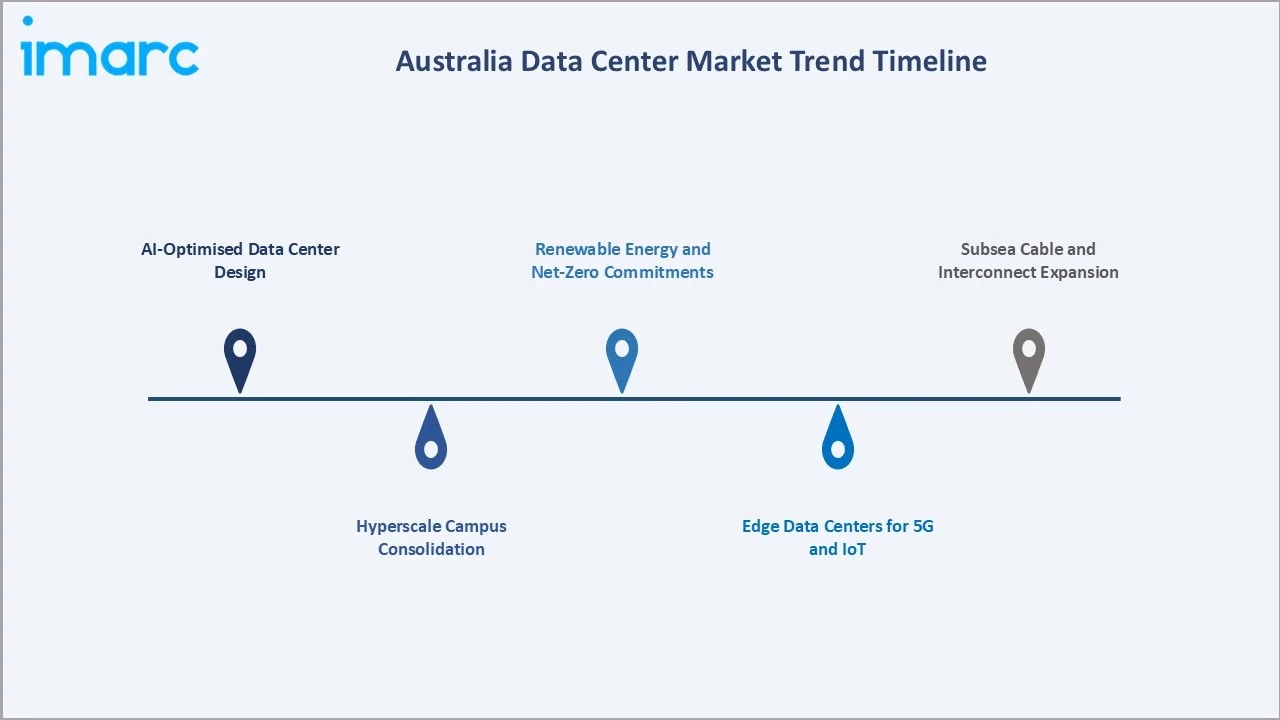
The physical location of data centres in Australia has a direct effect on the latency and cost of generative AI services. In 2026, significant cloud service providers have expanded their presence in the metropolitan area, providing devoted AI accelerators that lower the time it takes for a model to produce an action. For real-time applications, such as voice-activated consumer assistants or automated trading systems, this proximity is important. Minimizing latency does not just enhance the user experience; it likewise reduces the quantity of time a compute instance is active, which straight reduces the operational cost.
Numerous companies are moving far from a one-size-fits-all approach to model choice. Instead of utilizing the most powerful design for every query, they use a router to direct easy questions to cheaper, much faster models and reserve the most complex designs for high-value reasoning jobs. This tiered architecture is a trademark of a mature AI technique. Business that have incorporated Technology Spend into their workflow are seeing better resource allowance since they can match the intricacy of the task to the expense of the calculate. This level of granularity in cloud management is what separates successful implementations from those that merely contribute to the business overhead.
Data preparation remains the most considerable concealed expense in the AI lifecycle. In 2026, the focus has shifted from "huge information" to "quality information." Australian organisations are investing heavily in data cleaning and vector databases to guarantee their designs have access to accurate, exclusive information. This is typically implemented through Retrieval-Augmented Generation (RAG), which allows a model to search for specific company information before producing a response. This method minimizes "hallucinations" and makes sure that the output pertains to the local context of the surrounding region.

Measuring Impact in the local economy
To validate the ongoing investment in cloud-based AI, companies are moving away from vague metrics like "efficiency gains" toward more concrete indications. In 2026, ROI is measured by the reduction in time-to-market for brand-new items, the accuracy of automated compliance checks, and the boost in client retention rates. For a monetary services company in the business district, a 10% decrease in the time required to process loan applications through AI-assisted document evaluation can lead to countless dollars in saved labour and better capital performance.
Another area of focus is the reduction of technical financial obligation. Early AI implementations were frequently brittle and difficult to maintain. By 2026, using standardised APIs and containerised design implementations has actually made it much easier for organisations to change in between cloud suppliers or update their designs without rewording big portions of their code. This versatility is an essential part of the ROI computation, as it safeguards the organisation against vendor lock-in and allows them to take advantage of falling calculate costs as new hardware ends up being offered in the regional market.
The human component of the ROI formula is likewise being scrutinised more carefully. Rather of replacing workers, the most successful Australian companies are using generative AI to handle repeated tasks, allowing their personnel to focus on more complex, high-value work. This shift needs a significant investment in training and change management. Organisations that deal with AI as a tool for augmentation instead of replacement tend to see greater levels of employee engagement and better long-term results. The worth of Technology Spend in this context is discovered in how it assists humans in browsing complicated information sets more quickly than previously possible.
Security and Compliance in the regional sector
Security is no longer an afterthought in AI releases. In 2026, "prompt injection" and information leak are widely known threats that require particular architectural safeguards. Australian businesses should guarantee that the data utilized to train or prompt their models does not leave the nation if it includes sensitive individual info. This has actually resulted in the rise of personal AI instances hosted within Australian data centres. While these private instances can be more costly than shared public services, the reduction in risk and the ability to satisfy stringent regulative requirements in the local area make them a more viable long-lasting financial investment.
Governance boards are now regularly auditing AI systems for predisposition and accuracy. A design that supplies inaccurate info or demonstrates prejudiced behaviour can cause considerable reputational damage and lead to legal liabilities. For that reason, the expense of ongoing monitoring and human-in-the-loop oversight is a needed part of the cloud budget plan. Companies that stop working to represent these costs typically discover their ROI decreased by the requirement for pricey "firefighting" or legal settlements in the future. Efficient governance guarantees that the AI remains a possession rather than a liability for organisations operating in the Australian market.
The energy effectiveness of AI is also ending up being an element in the ROI estimation. As Australia approaches more stringent carbon reporting requirements in 2026, the "green cost" of running massive AI models is being kept an eye on. Cloud service providers that use renewable resource sources or deal carbon-offset programmes are ending up being the preferred partners for organisations with strong environmental targets. In many cases, optimising a model to be more energy-efficient can likewise make it much faster and more affordable to run, creating an uncommon circumstances where ecological goals and financial goals line up perfectly.
Future Outlook for the regional market
Looking ahead toward the end of 2026 and into 2027, the focus will likely move toward "agentic" workflows. These are systems where AI designs can not only create text however likewise carry out actions throughout various software platforms. An AI agent might determine a supply chain delay, research option providers in the local region, and draft a new purchase order for a manager to approve. This level of automation represents the next frontier for cloud ROI, as it moves the AI from being a passive advisor to an active participant in service processes.
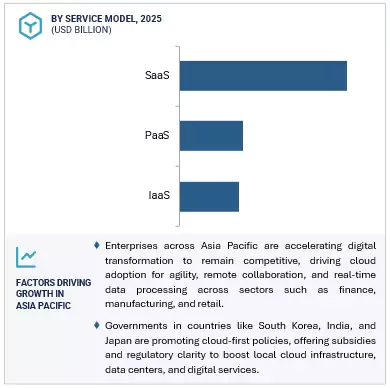
The success of these sophisticated systems depends on the underlying cloud architecture. High-speed networking, effective information storage, and scalable compute are the structures upon which these representatives are developed. For businesses in the urban market, the objective is to build a platform that is durable enough to manage these complicated jobs while staying affordable. The companies that accomplish this will be well-positioned to lead their respective markets in the second half of the years.
Finally, the importance of regional knowledge can not be ignored. While the designs themselves are frequently developed by global tech giants, the execution and customisation happen in your area. There is a growing need for cloud architects and information scientists who understand the specific requirements of the Australian market. By investing in regional talent and local facilities, organisations can make sure that their generative AI deployments are not just technically sound but likewise culturally and lawfully suitable for the environment in which they run. This regional focus is maybe the most trusted method to ensure a positive roi in the long term.

Latest Posts

Updating Legacy Databases for Real-Time AI Processing
Five Security Pillars for the 2026 Australian Cloud
The 2026 Outlook for Australian Cloud Facilities Costs