All Categories
Featured
Three Factors to Focus On Sovereign Clouds for AI Workloads
Table of Contents
Operational Efficiency in the Australian market
The year 2026 marks a period where generative expert system has moved beyond the stage of experimental pilots into a core component of company infrastructure. In the regional capital, organisations are no longer asking if they ought to embrace these technologies, but rather how to extract the greatest possible roi from their cloud releases. The preliminary rush to integrate big language models has actually been changed by a more calculated approach that prioritises cost control, information residency, and specific business results. Success in this environment needs a deep understanding of how cloud resources are taken in throughout reasoning and how to align those expenses with measurable value.
The Australian regulatory environment in 2026 has actually become more specified, particularly worrying information sovereignty and the ethical application of automated systems. This clarity enables services in the local territory to prepare their cloud architectures with greater certainty. The complexity of managing distributed AI workloads across public and private clouds remains a substantial hurdle. Business that focus on digital infrastructure are finding that the most effective course includes a mix of international cloud suppliers and regional sovereign cloud solutions to balance performance with compliance.
Expense management has emerged as the primary driver of method. In the early days of adoption, many organisations dealt with "sticker label shock" when their speculative models were scaled to deal with thousands of day-to-day deals. By 2026, the industry has actually embraced specialised FinOps practices tailored for AI. These practices include tracking the expense per token, the efficiency of different model sizes, and the physical area of calculate resources. Organisations in the urban centre are increasingly turning to small language models (SLMs) that can operate on more economical hardware while still providing high accuracy for specific tasks like file analysis or consumer support.
Facilities Strategies in the Australian region
The physical location of information centres in Australia has a direct effect on the latency and cost of generative AI services. In 2026, major cloud providers have expanded their existence in the metropolitan area, offering dedicated AI accelerators that reduce the time it takes for a model to create a response. For real-time applications, such as voice-activated consumer assistants or automated trading systems, this proximity is important. Reducing latency does not just improve the user experience; it likewise lowers the amount of time a calculate circumstances is active, which straight lowers the functional expense.
Lots of services are moving far from a one-size-fits-all method to model selection. Rather of utilizing the most effective model for every single query, they use a router to direct simple concerns to cheaper, quicker models and reserve the most complex models for high-value reasoning tasks. This tiered architecture is a hallmark of a mature AI strategy. Companies that have actually incorporated IT Budgetary Oversight into their workflow are seeing better resource allocation since they can match the complexity of the job to the expense of the compute. This level of granularity in cloud management is what separates rewarding implementations from those that simply contribute to the business overhead.
Data preparation remains the most substantial concealed cost in the AI lifecycle. In 2026, the focus has moved from "huge information" to "quality data." Australian organisations are investing heavily in data cleansing and vector databases to guarantee their designs have access to accurate, exclusive details. This is typically executed through Retrieval-Augmented Generation (RAG), which allows a model to search for particular company information before generating an answer. This technique lowers "hallucinations" and makes sure that the output is appropriate to the regional context of the surrounding region.
Determining Impact in the local economy
To validate the ongoing financial investment in cloud-based AI, services are moving far from unclear metrics like "performance gains" towards more concrete indications. In 2026, ROI is measured by the decrease in time-to-market for new items, the accuracy of automated compliance checks, and the increase in consumer retention rates. For a financial services firm in the business district, a 10% reduction in the time taken to process loan applications through AI-assisted file review can lead to millions of dollars in saved labour and improved capital performance.
Another area of focus is the decrease of technical debt. Early AI applications were typically breakable and tough to keep. By 2026, making use of standardised APIs and containerised design deployments has actually made it simpler for organisations to switch between cloud providers or update their designs without rewording big portions of their code. This flexibility is a key part of the ROI calculation, as it protects the organisation against supplier lock-in and enables them to make the most of falling calculate prices as brand-new hardware appears in the regional market.
The human aspect of the ROI formula is also being scrutinised more closely. Rather of replacing workers, the most effective Australian companies are utilizing generative AI to deal with repetitive tasks, allowing their staff to focus on more complex, high-value work. This shift needs a substantial financial investment in training and modification management. Organisations that deal with AI as a tool for enhancement rather than replacement tend to see higher levels of worker engagement and much better long-lasting outcomes. The worth of IT Budgetary Oversight in this context is found in how it assists humans in navigating intricate information sets more quickly than previously possible.
Security and Compliance in the regional sector
Security is no longer an afterthought in AI implementations. In 2026, "timely injection" and information leak are well-known threats that need specific architectural safeguards. Australian organizations must ensure that the information utilized to train or prompt their models does not leave the nation if it includes delicate personal information. This has caused the increase of personal AI instances hosted within Australian data centres. While these personal instances can be more expensive than shared civil services, the decrease in risk and the ability to meet stringent regulative requirements in the local area make them a more practical long-term financial investment.
Governance boards are now routinely auditing AI systems for bias and accuracy. A design that supplies incorrect information or shows biased behaviour can trigger significant reputational damage and cause legal liabilities. The cost of ongoing tracking and human-in-the-loop oversight is a necessary part of the cloud budget plan. Organizations that stop working to account for these expenses frequently discover their ROI reduced by the need for costly "firefighting" or legal settlements later on. Reliable governance guarantees that the AI remains a property instead of a liability for organisations operating in the Australian market.
The energy performance of AI is likewise ending up being an aspect in the ROI calculation. As Australia moves toward stricter carbon reporting requirements in 2026, the "green expense" of running massive AI models is being monitored. Cloud providers that use eco-friendly energy sources or deal carbon-offset programmes are becoming the preferred partners for organisations with strong environmental targets. In some cases, optimising a model to be more energy-efficient can likewise make it faster and less expensive to run, developing an unusual circumstances where environmental objectives and monetary goals line up completely.
Future Outlook for the regional market
Looking ahead toward completion of 2026 and into 2027, the focus will likely shift toward "agentic" workflows. These are systems where AI designs can not just create text but also perform actions throughout various software platforms. For example, an AI agent might identify a supply chain delay, research option providers in the local region, and draft a new order for a supervisor to authorize. This level of automation represents the next frontier for cloud ROI, as it moves the AI from being a passive advisor to an active individual in company procedures.
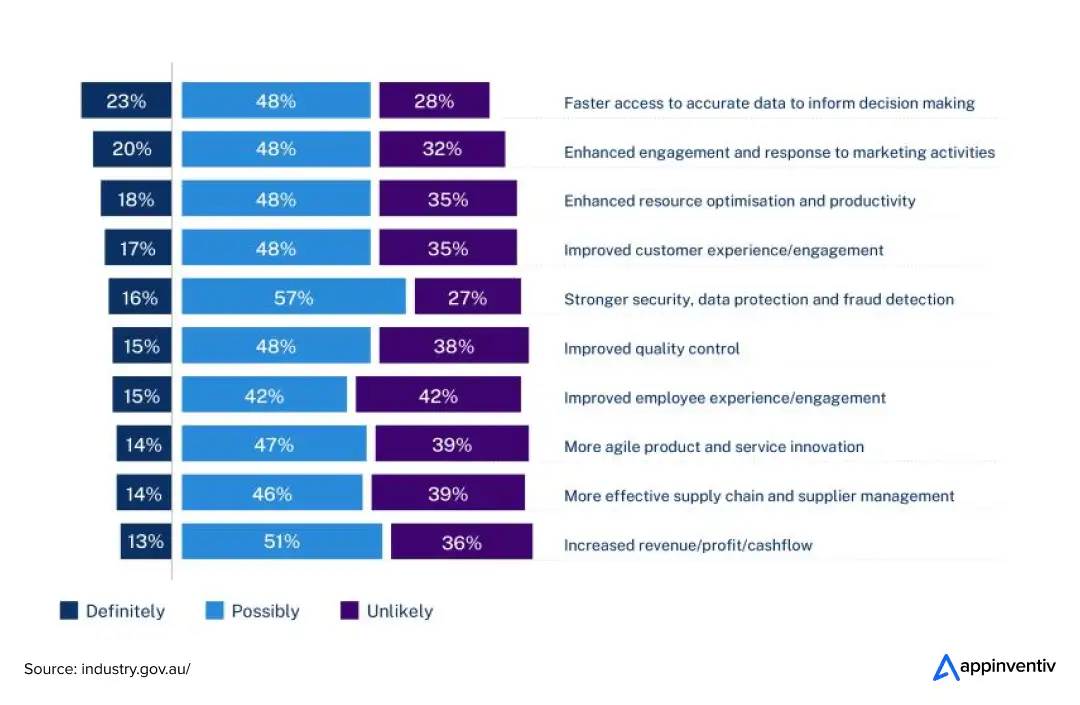
The success of these sophisticated systems depends on the underlying cloud architecture. High-speed networking, efficient data storage, and scalable calculate are the structures upon which these representatives are built. For companies in the urban market, the goal is to develop a platform that is durable enough to handle these intricate jobs while staying economical. The companies that accomplish this will be well-positioned to lead their particular markets in the second half of the decade.
The value of regional know-how can not be overlooked. While the designs themselves are often established by global tech giants, the application and customisation happen in your area. There is a growing need for cloud designers and data researchers who comprehend the particular needs of the Australian market. By investing in regional skill and regional infrastructure, organisations can make sure that their generative AI releases are not simply technically sound but also culturally and legally suitable for the environment in which they run. This regional focus is maybe the most reliable way to make sure a favorable roi in the long term.

Latest Posts

Updating Legacy Databases for Real-Time AI Processing
Five Security Pillars for the 2026 Australian Cloud
The 2026 Outlook for Australian Cloud Facilities Costs