All Categories
Featured
Table of Contents
The 2026 Shift Towards Autonomous Cloud Governance
The Australian digital sector is currently navigating a duration of substantial change. As we move through 2026, the crossway of expert system and cloud facilities has actually moved beyond simple experimentation. Organisations across the country now prioritise architectural styles that permit automated decision-making while keeping stringent human oversight. This shift is not simply about speed. It concentrates on producing a resilient environment where security protocols adjust to hazards in real-time without manual intervention.
In the present 2026 climate, the complexity of handling multi-cloud environments has required an approach AI-native orchestration. These systems do more than simply host applications. They handle traffic circulation, forecast hardware failures, and reallocate resources based on live need patterns. For Australian organizations, this means less time invested on regular upkeep and more time dedicated to refining the logic that governs their digital operations. The focus has moved from "how do we transfer to the cloud" to "how do we secure the intelligence living within it."
Security is no longer a perimeter-based idea. In 2026, the perimeters are fluid and constantly redefined by identity-based access designs. AI agents now validate every demand, searching for anomalies in behavior that a human expert may miss out on. This level of scrutiny is essential due to the fact that the hazards themselves are significantly automated. Defending a fixed network is no longer sufficient when assailants utilize machine finding out to discover vulnerabilities in code as it is being released.
Dealing With Data Residency in the Age of Generative Intelligence
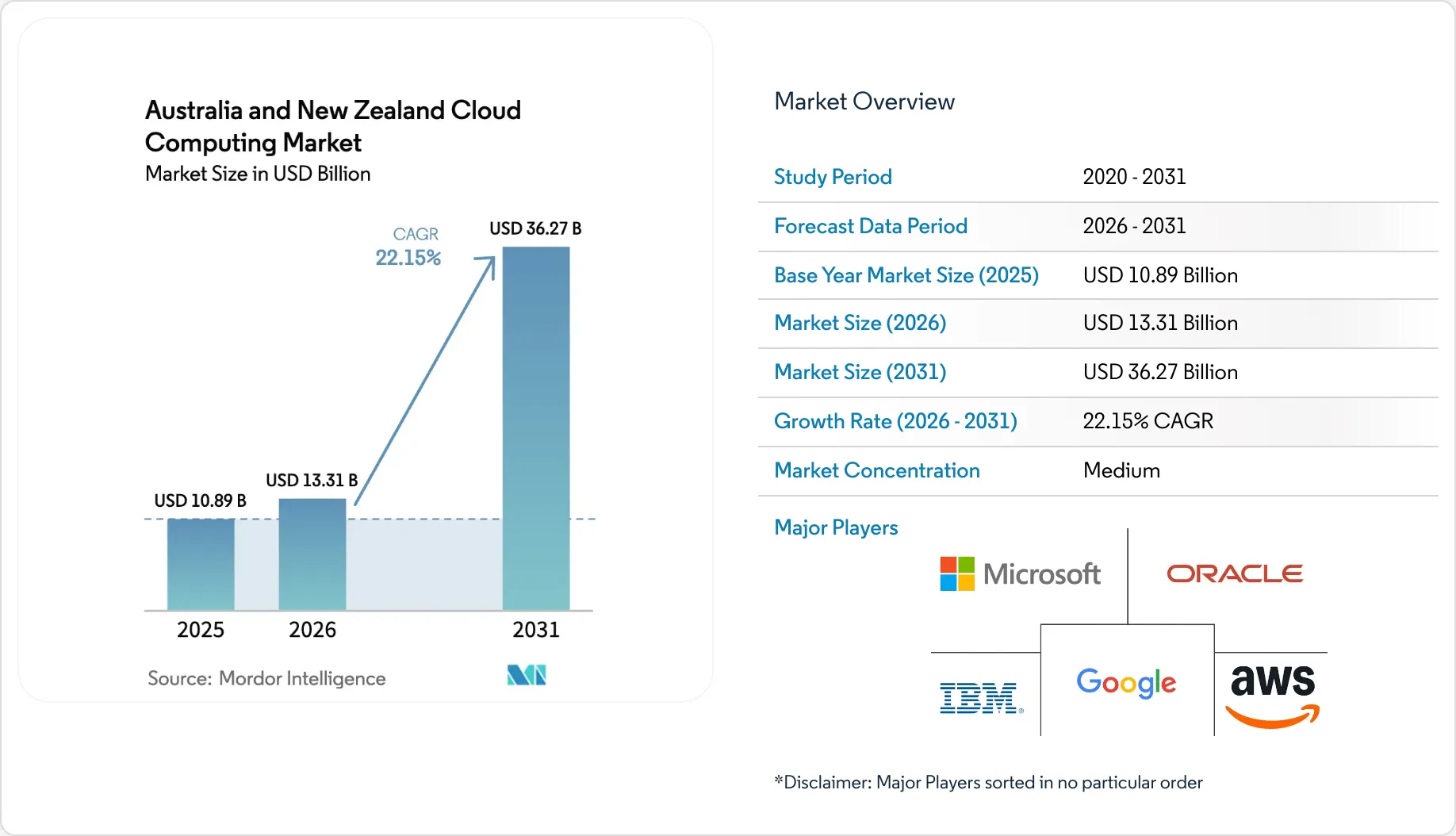
Data residency remains a leading concern for public and economic sectors in 2026. The Australian federal government has upgraded its standards to guarantee that any AI design processing delicate person information need to remain within national borders. This has resulted in the rise of sovereign cloud solutions. These localised hubs offer the compute power needed for large-scale design training while making sure that data does not leave the jurisdiction. Business are finding that local processing reduces latency and offers a clearer path to compliance with local personal privacy laws.
The push for localised calculate has actually altered how local data centres run. We see a pattern where smaller sized, high-density centers are being built closer to urban centres. These facilities are designed to deal with the massive heat output of 2026-era GPUs. Performance in cooling and power consumption has actually ended up being as crucial as the speed of the processors themselves. Development in Enterprise Resource Governance mirrors the increasing need for localised compute power as organisations tighten their data boundaries.
Compliance is now dealt with through "as-code" policies. Rather of annual audits that look back at previous performance, 2026 systems supply real-time compliance dashboards. These control panels show exactly where information is stored, who has accessed it, and how it is being utilized by internal AI models. If an information package tries to move into a non-compliant zone, the system instantly obstructs the transfer and notifies the governance team. This level of automation reduces the threat of human error, which stays the leading reason for information breaches.
Operational Durability Through Predictive Maintenance
Cloud operations in 2026 are defined by their capability to self-heal. Predictive maintenance algorithms keep an eye on the health of every virtual maker and container in the environment. If a service reveals indications of upcoming failure, the system spins up a replacement and migrates the work before the user experiences any downtime. This proactive method has actually significantly increased the uptime of critical services in the banking and health care sectors.
The cost of cloud calculate is a constant issue in 2026. While the power of these systems has grown, so has the price of the energy needed to run them. AI-driven cost management tools have ended up being necessary for maintaining success. These tools evaluate usage patterns and suggest optimisations, such as moving non-critical tasks to off-peak hours or utilizing lower-cost area instances for batch processing. Companies that neglect these optimisations discover themselves facing spiralling operational expenses that can derail long-term jobs.
The combination of automated observability allows teams to see deep into their stacks. It is no longer adequate to know that a system is "up." Engineers need to know how the AI is making choices and whether those decisions are drifting away from the desired criteria. Model drift is a severe concern in 2026, where an AI's logic changes with time as it processes brand-new information. Continuous monitoring guarantees that the intelligence remains aligned with the core values of the organisation.
Constructing a Protected CI/CD Pipeline for AI Models
Development cycles have sped up quickly. In 2026, software is often written by AI assistants and evaluated by human developers. This suggests the security of the pipeline itself is under the microscope. Every line of code is scanned for vulnerabilities at the moment of creation. If a designer uses a library with a recognized flaw, the system recommends a safe and secure alternative immediately. This "shift left" method to security has actually ended up being the requirement for any organisation operating in the cloud.
Model security is another layer of the 2026 plan. Attacks such as prompt injection or information poisoning are real threats that groups need to protect against. Protecting the inputs and outputs of a model is just as essential as protecting the server it operates on. Lots of organisations are now utilizing "red group" AI to continuously penetrate their own models for weak points. This continuous testing cycle helps determine gaps in the reasoning before they can be made use of by external stars.
Combination of Secure Enterprise Resource Governance Tactics enables security teams to react to threats before they manifest. By the time a harmful actor efforts to acquire access, the system has actually already identified the pattern of the attack and strengthened the appropriate barriers. This level of insight is just possible when the security layer is completely integrated into the cloud infrastructure rather than being added as an afterthought.
The Human Element in an Automated Landscape
While automation is the dominant theme of 2026, the human element stays the last line of defense. The function of the cloud engineer has altered from a service technician who fixes servers to a strategist who develops the reasoning governing those servers. Critical thinking and ethical decision-making are the most in-demand skills in the 2026 task market. Understanding the "why" behind an AI's decision is now more vital than understanding how to compose the underlying code.
Education and training have needed to equal these modifications. Australian universities and technical colleges have actually revamped their curricula to concentrate on AI principles and safe systems design. Graduates in 2026 are expected to comprehend the legal and social ramifications of the innovation they develop. There is a growing acknowledgment that a safe and secure cloud is not just a technical accomplishment however a social one, requiring the trust of the users who depend on it every day.
Collaboration in between the public and private sectors is likewise greater than in previous years. Info sharing concerning brand-new hazards occurs in near real-time. When a brand-new vulnerability is discovered in a typical cloud component, the repair is typically dispersed throughout the network within minutes. This collective defense method has made the Australian cloud environment among the most resilient in the world, bring in international investment regardless of the high expense of operations.
Future-Proofing for 2027 and Beyond
Looking ahead, the focus is on sustainability and long-lasting viability. The energy intake of AI-powered clouds is under extreme scrutiny. We are seeing a relocation towards "green AI," where models are optimised for energy efficiency instead of just raw performance. This is not simply an ethical option. In 2026, carbon taxes and energy regulations make it a financial need. Systems that can do more with less power will be the winners in the coming years.
The 2026 plan is not a static document. It is a living method that progresses as new innovations emerge. Quantum-resistant file encryption is starting to appear in cloud offerings, preparing for the day when conventional encryption may be jeopardized. The organisations that prosper are those that remain flexible, constantly questioning their presumptions and searching for ways to improve their security posture. The objective is to produce a digital structure that is as strong as it is wise, guaranteeing that Australian development continues to prosper in a progressively complicated global environment.
Strategic preparing now involves a mix of danger management and technological insight. Leaders should balance the desire for fast development with the requirement for stable, safe operations. By focusing on the basics of information stability, identity management, and operational transparency, Australian services are setting a standard for the rest of the world. The 2026 environment is challenging, however it likewise offers the tools required to build something truly lasting.

Latest Posts
Updating Legacy Databases for Real-Time AI Processing
Five Security Pillars for the 2026 Australian Cloud
The 2026 Outlook for Australian Cloud Facilities Costs