All Categories
Featured
How to Prevent Supplier Lock-In During AI Growth
Table of Contents
Operational Performance in the Australian market
The year 2026 marks a period where generative expert system has actually moved beyond the phase of experimental pilots into a core component of company facilities. In the regional capital, organisations are no longer asking if they need to adopt these innovations, however rather how to draw out the greatest possible roi from their cloud deployments. The initial rush to integrate big language designs has been replaced by a more calculated method that prioritises cost control, information residency, and particular company results. Success in this environment needs a deep understanding of how cloud resources are taken in during reasoning and how to line up those expenses with measurable worth.
The Australian regulatory environment in 2026 has ended up being more specified, especially worrying data sovereignty and the ethical application of automated systems. This clearness enables services in the local territory to prepare their cloud architectures with greater certainty. The intricacy of handling dispersed AI work throughout public and private clouds stays a significant difficulty. Companies that focus on digital infrastructure are discovering that the most effective path involves a mix of global cloud suppliers and local sovereign cloud solutions to balance efficiency with compliance.
Cost management has actually become the primary driver of technique. In the early days of adoption, numerous organisations dealt with "sticker shock" when their experimental designs were scaled to handle thousands of daily deals. By 2026, the industry has adopted specialised FinOps practices customized for AI. These practices involve tracking the expense per token, the effectiveness of various model sizes, and the physical place of calculate resources. Organisations in the urban centre are increasingly turning to small language designs (SLMs) that can run on less costly hardware while still providing high accuracy for particular jobs like file analysis or client support.
Infrastructure Strategies in the Australian region
The physical area of data centres in Australia has a direct effect on the latency and cost of generative AI services. In 2026, major cloud suppliers have actually expanded their presence in the metropolitan area, offering devoted AI accelerators that decrease the time it takes for a design to generate an action. For real-time applications, such as voice-activated consumer assistants or automated trading systems, this proximity is important. Reducing latency does not just improve the user experience; it also lowers the quantity of time a compute circumstances is active, which straight lowers the functional expense.
Lots of services are moving far from a one-size-fits-all method to design choice. Instead of using the most powerful design for each question, they use a router to direct basic questions to cheaper, much faster models and reserve the most complicated models for high-value thinking tasks. This tiered architecture is a hallmark of a fully grown AI technique. Companies that have actually incorporated Service Delivery into their workflow are seeing much better resource allotment because they can match the intricacy of the task to the cost of the compute. This level of granularity in cloud management is what separates lucrative implementations from those that simply include to the corporate overhead.
Information preparation stays the most significant surprise cost in the AI lifecycle. In 2026, the focus has actually moved from "big information" to "quality information." Australian organisations are investing heavily in information cleansing and vector databases to guarantee their designs have access to precise, exclusive information. This is often implemented through Retrieval-Augmented Generation (RAG), which enables a model to look up specific company data before producing an answer. This technique reduces "hallucinations" and makes sure that the output is pertinent to the regional context of the surrounding region.
Determining Effect in the local economy
To justify the ongoing investment in cloud-based AI, services are moving away from unclear metrics like "performance gains" toward more concrete indications. In 2026, ROI is measured by the reduction in time-to-market for new products, the accuracy of automated compliance checks, and the boost in consumer retention rates. For a monetary services firm in the business district, a 10% decrease in the time required to process loan applications through AI-assisted document review can result in millions of dollars in saved labour and better capital efficiency.
Another area of focus is the reduction of technical financial obligation. Early AI applications were typically brittle and challenging to maintain. By 2026, making use of standardised APIs and containerised design releases has made it easier for organisations to switch in between cloud companies or update their designs without rewording large portions of their code. This versatility is an essential part of the ROI estimation, as it protects the organisation versus supplier lock-in and permits them to benefit from falling calculate prices as new hardware appears in the regional market.
The human element of the ROI formula is also being scrutinised more closely. Instead of replacing employees, the most successful Australian companies are using generative AI to handle repeated tasks, allowing their personnel to concentrate on more complex, high-value work. This shift needs a considerable investment in training and change management. Organisations that treat AI as a tool for enhancement instead of replacement tend to see greater levels of staff member engagement and much better long-term results. The value of Service Delivery in this context is found in how it helps humans in browsing complicated data sets faster than previously possible.
Security and Compliance in the regional sector
Security is no longer an afterthought in AI deployments. In 2026, "prompt injection" and data leak are popular risks that need specific architectural safeguards. Australian companies should make sure that the data utilized to train or trigger their designs does not leave the country if it contains sensitive individual information. This has actually caused the rise of private AI circumstances hosted within Australian data centres. While these private instances can be more expensive than shared civil services, the decrease in risk and the capability to meet strict regulatory requirements in the local area make them a more practical long-term investment.
Governance boards are now regularly auditing AI systems for bias and accuracy. A design that offers incorrect information or shows biased behaviour can cause substantial reputational damage and lead to legal liabilities. The expense of ongoing monitoring and human-in-the-loop oversight is a needed part of the cloud budget plan. Companies that fail to represent these costs frequently discover their ROI diminished by the need for expensive "firefighting" or legal settlements in the future. Effective governance ensures that the AI stays a property instead of a liability for organisations operating in the Australian market.
The energy efficiency of AI is likewise ending up being a consider the ROI estimation. As Australia approaches more stringent carbon reporting requirements in 2026, the "green expense" of running large-scale AI models is being monitored. Cloud suppliers that use renewable energy sources or offer carbon-offset programs are becoming the favored partners for organisations with strong ecological targets. In some cases, optimising a model to be more energy-efficient can also make it much faster and more affordable to run, developing a rare instance where environmental goals and monetary goals align completely.
Future Outlook for the regional market
Looking ahead towards the end of 2026 and into 2027, the focus will likely move towards "agentic" workflows. These are systems where AI models can not only produce text but likewise perform actions throughout different software platforms. An AI representative could determine a supply chain delay, research study alternative suppliers in the local region, and draft a brand-new purchase order for a supervisor to approve. This level of automation represents the next frontier for cloud ROI, as it moves the AI from being a passive consultant to an active individual in organization procedures.
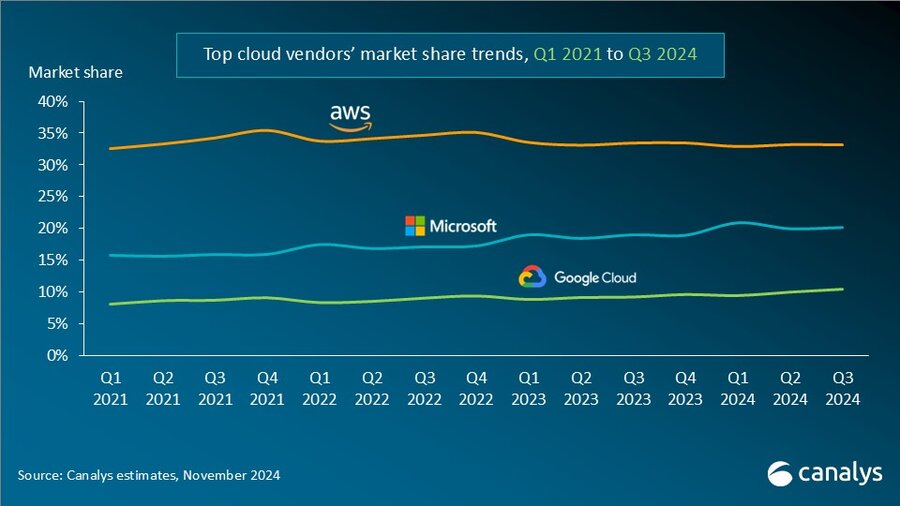
The success of these advanced systems depends upon the underlying cloud architecture. High-speed networking, efficient data storage, and scalable compute are the structures upon which these representatives are constructed. For services in the urban market, the objective is to build a platform that is durable enough to handle these complex jobs while remaining affordable. The companies that achieve this will be well-positioned to lead their particular markets in the 2nd half of the decade.
Lastly, the importance of local knowledge can not be disregarded. While the designs themselves are frequently established by international tech giants, the application and customisation happen in your area. There is a growing need for cloud designers and data scientists who understand the particular needs of the Australian market. By purchasing regional talent and regional facilities, organisations can guarantee that their generative AI deployments are not simply technically sound but also culturally and legally proper for the environment in which they operate. This regional focus is maybe the most trustworthy method to guarantee a favorable return on financial investment in the long term.

Latest Posts

Updating Legacy Databases for Real-Time AI Processing
Five Security Pillars for the 2026 Australian Cloud
The 2026 Outlook for Australian Cloud Facilities Costs