All Categories
Featured
Developing a Resilient Digital Core for the 2026 Market
Table of Contents
- – Evaluating the 2026 Cloud Environment in the l...
- – The Shift Toward Sovereign Cloud and Data Privacy
- – Breaking Down the Monolith
- – Infrastructure as Code and the Automation of M...
- – The Role of Edge Computing in 2026
- – Addressing the Talent and Skills Space
- – Financial Realities of 2026 Migrations
- – The Future of Business Architecture in Australia
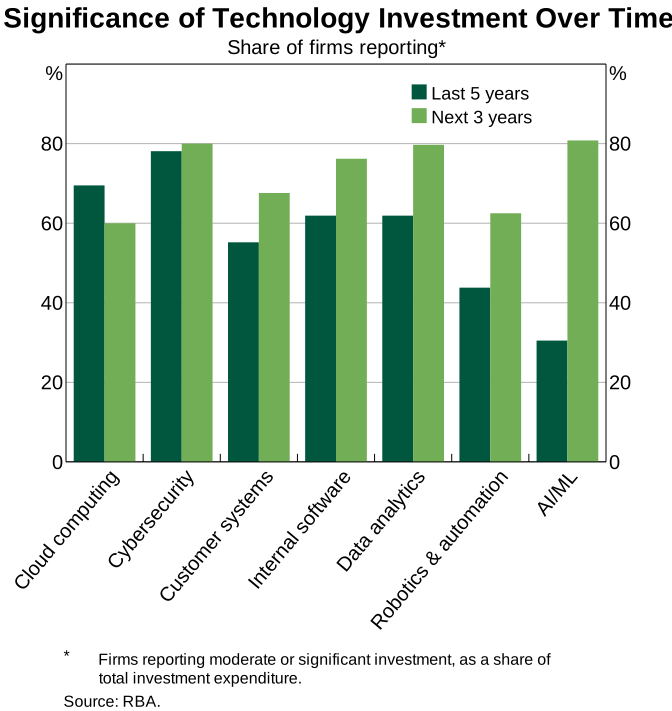
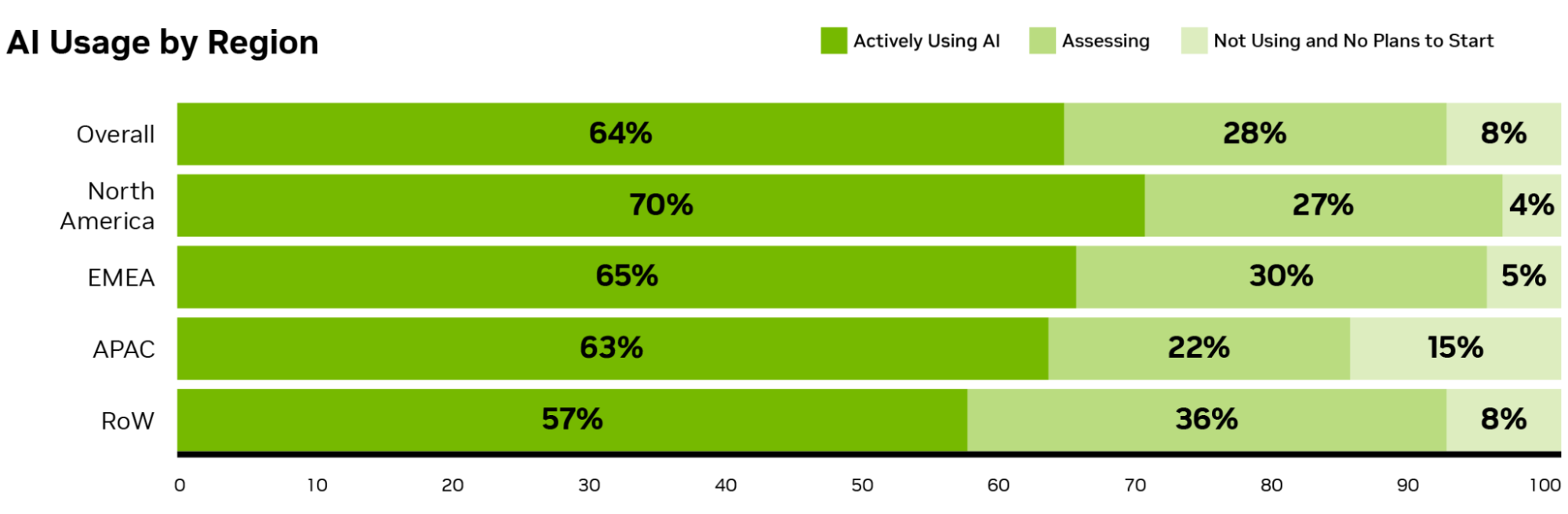
The year 2026 has actually brought an unique clarity to the Australian business sector. While the previous five years concentrated on the preliminary rush to move information off-premises, the current priority centers on making that information beneficial. The majority of organizations in major Australian hubs have actually realized that simply existing in the cloud is inadequate for the needs of modern-day synthetic intelligence. The transition from fixed storage to AI-ready architectures is the specifying technical difficulty of the present fiscal year. This shift includes moving away from brittle, monolithic structures that have actually governed operations for years and toward fluid, data-centric designs capable of supporting real-time reasoning and massive language model integration.

Evaluating the 2026 Cloud Environment in the local region
The Australian company environment is currently divided. On one side are companies that treated cloud migration as a basic change of address. On the other are those rebuilding their structures to support the high-compute requirements of 2026-era generative tools. In metropolitan areas, the weight of technical debt has actually ended up being a tangible monetary liability. Older systems-- frequently described as the "digital basement"-- are avoiding firms from embracing the current autonomous agents and predictive analytics. These legacy setups frequently lack the needed APIs and data pipelines to feed details into modern-day designs, leading to an "AI gap" that separates market leaders from those having a hard time to keep pace.

Rather of the broad, general-purpose cloud techniques seen a couple of years earlier, current efforts concentrate on specific, high-performance computing clusters. Data is no longer simply stored; it is curated for intake. This needs a rethink of how information architecture is managed at the source. Organizations across the region are finding that their old data lakes have ended up being information swamps, filled with unlabelled, disorganized, and inaccessible info. Cleaning this information is the very first step in the 2026 migration process, frequently requiring an overall overhaul of the underlying database structures before any AI can be applied.
The Shift Toward Sovereign Cloud and Data Privacy
Privacy regulations in Australia have tightened up substantially by 2026. The requirement for data sovereignty has moved from a niche government requirement to a basic organization need. For a normal enterprise in regional centers, this implies ensuring that AI training and reasoning take place within the geographic borders of Australia. The dependence on overseas processing has actually dwindled as regional providers broaden their capacity. This geographical limitation adds a layer of complexity to tradition migration, as businesses can not simply depend on the default settings of international hyperscalers.
Regional compliance requireds need a level of openness that older systems can not offer. Legacy software frequently runs as a "black box," where information goes into and exits without a clear audit path. In the current regulative environment, this is a significant risk. Modernizing these systems involves carrying out granular logging and observability tools that track how every piece of client data is utilized by AI designs. Business are significantly turning to GCC Financial Pressure to ensure their internal structures satisfy these brand-new transparency requirements. This is not simply a matter of legal safety; it is a prerequisite for developing trust with a consumer base that is more aware of information principles than ever in the past.
Breaking Down the Monolith
The technical procedure of migration in 2026 concentrates on deconstructing big, interconnected applications into smaller sized, independent services. This microservices approach enables greater versatility when integrating with AI tools. If a business in the surrounding suburbs desires to include a natural language interface to its inventory management, it ought to not need to rewrite the whole system. By separating functions into discrete systems, organizations can update parts of their infrastructure without risking an overall system failure. This modularity is a core element of being AI-ready.
Many firms are discovering that "lift and shift" is a failed strategy. Moving an old, inefficient application to the cloud simply results in an expensive, old, ineffective application in the cloud. Instead, the 2026 pattern is "refactor and replace." This involves looking at the core company reasoning and rewriting it for a cloud-native environment. While the initial cost is higher, the long-term cost savings in calculate performance and AI compatibility are undeniable. The focus is on creating a lean, responsive core that can scale up or down based upon the processing needs of specific AI jobs.
Infrastructure as Code and the Automation of Migration
The speed of migration has increased due to the development of automated tools. In the local territory, IT departments are using AI to move to AI. These tools can scan countless lines of old code, identify reliances, and recommend modern-day options. This has reduced the time needed for a typical migration from years to months. The human aspect remains a bottleneck. Discovering designers who understand both the old languages (like COBOL or early Java) and the new cloud-native requirements is a continuous battle for services in urban areas.
Facilities as Code (IaC) has become the requirement for managing these brand-new environments. By specifying the entire hardware and software stack through scripts, business can guarantee consistency throughout their whole network. This is particularly essential for AI-ready architectures, which require specific configurations for GPUs and high-speed networking. When the infrastructure is code, it can be evaluated, versioned, and presented with the very same accuracy as software application. This level of control is necessary for the high-stakes world of 2026 business computing.
The Role of Edge Computing in 2026
Among the greatest shifts this year is the movement of AI processing closer to the source of the information. Edge computing has become a way to decrease latency and bandwidth costs. For a commercial firm in the local region, this may indicate processing sensor data on-site at a factory rather than sending all of it to a central information center in Sydney or Melbourne. Bridging the space in between legacy on-site hardware and these brand-new edge-cloud hybrids is a major part of the present migration wave.
Legacy hardware frequently lacks the processing power to handle AI in your area. The migration process includes installing small, powerful calculate nodes at the edge that function as a bridge. These nodes deal with the immediate, time-sensitive AI tasks and then sync the summed up data back to the main cloud. This hybrid model is ending up being the plan for Australian business sectors that run across big geographic locations. It stabilizes the need for main control with the requirement for regional speed.
Addressing the Talent and Skills Space
The technical hurdles of 2026 are frequently secondary to the human ones. The need for cloud architects, data engineers, and AI experts in the local market far goes beyond the supply. This has caused a change in how companies approach migration. Instead of trying to do everything in-house, lots of are trying to find external proficiency to assist the shift. Significant GCC Financial Pressure Protocols has actually ended up being a common method for enterprises to bridge the knowledge space without having to wait years to train their own personnel.
Education and reskilling have actually ended up being part of the migration timeline. An effective shift to an AI-ready cloud architecture needs the entire personnel to understand how to interact with brand-new systems. In the region, the most successful migrations are those that consist of an extensive training part. This is not practically teaching people how to use brand-new software application; it has to do with altering the organizational state of mind to be more data-driven and agile. The objective is to create a culture where every department tries to find ways to utilize the new AI abilities to improve their particular workflows.
Financial Realities of 2026 Migrations
The cost structure of IT has actually altered. In the past, companies dealt with large, periodic capital expenditures for servers and hardware. In 2026, the model is nearly entirely functional expenditure. While this supplies more versatility, it also needs much tighter management of cloud expenses. AI workloads can be extremely pricey if left unchecked. A considerable part of the migration to modern-day architecture involves setting up "FinOps" (Financial Operations) practices to monitor and optimize costs in real-time.
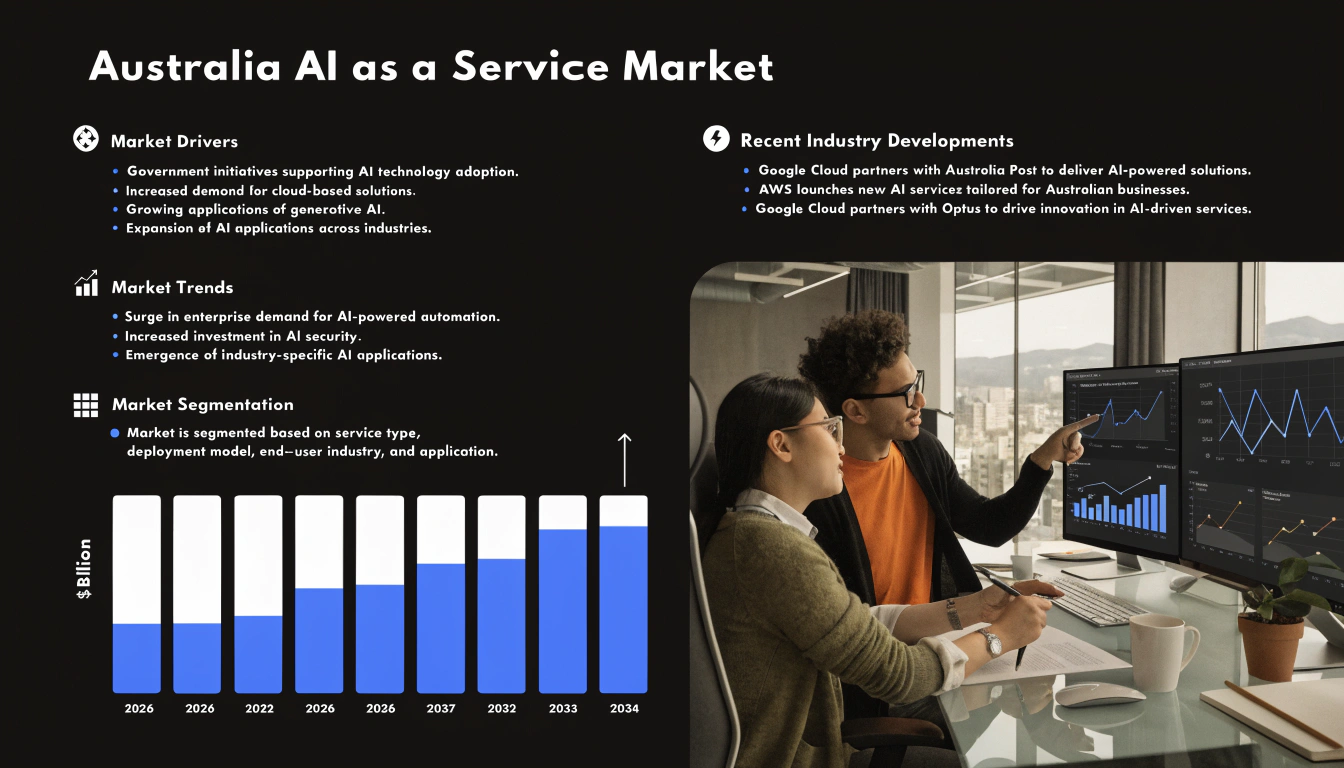
Organizations in the regional area are carrying out automated "eliminate switches" and resource limits to avoid AI designs from running up enormous costs. They are also taking a look at more efficient methods to keep information, moving less-used details to "cold" storage while keeping high-priority training information in high-performance tiers. This tiered technique is a trademark of a fully grown, AI-ready cloud method. It reveals a move far from the "shop whatever permanently" mindset towards a more strategic, value-based view of information management.
The Future of Business Architecture in Australia
Looking toward the end of 2026 and into 2027, the focus will likely shift from building these architectures to improving them. The preliminary "gap-bridging" phase will be over for the early adopters, leaving them complimentary to experiment with advanced self-governing systems. For those still stuck in tradition environments, the pressure will only increase. The competitive benefit of AI is no longer a theoretical concept; it is noticeable in the bottom lines of business across the local area.
The transfer to AI-ready cloud architectures is not a one-time project but an essential modification in how Australian organizations operate. It requires a dedication to continuous model and a willingness to leave the security of familiar however out-of-date systems. In the local capital, business that prosper will be those that view their technical facilities as a living, developing part of their technique, rather than a fixed cost center. The bridge to the future is being built today, one moved database and refactored application at a time.
As the year advances, the difference between "tech companies" and "standard business" continues to blur. Every organization is now a data company. The success of these firms depends upon their ability to move past the limitations of the past and embrace the high-speed, AI-integrated reality of the mid-2020s. By concentrating on data quality, sovereign compliance, and modular architecture, Australian business are placing themselves to lead in a worldwide economy that is significantly defined by device intelligence and cloud-native agility.

Table of Contents
- – Evaluating the 2026 Cloud Environment in the l...
- – The Shift Toward Sovereign Cloud and Data Privacy
- – Breaking Down the Monolith
- – Infrastructure as Code and the Automation of M...
- – The Role of Edge Computing in 2026
- – Addressing the Talent and Skills Space
- – Financial Realities of 2026 Migrations
- – The Future of Business Architecture in Australia
Latest Posts

Updating Legacy Databases for Real-Time AI Processing
Five Security Pillars for the 2026 Australian Cloud
The 2026 Outlook for Australian Cloud Facilities Costs
Latest Posts
Updating Legacy Databases for Real-Time AI Processing
Five Security Pillars for the 2026 Australian Cloud
The 2026 Outlook for Australian Cloud Facilities Costs